
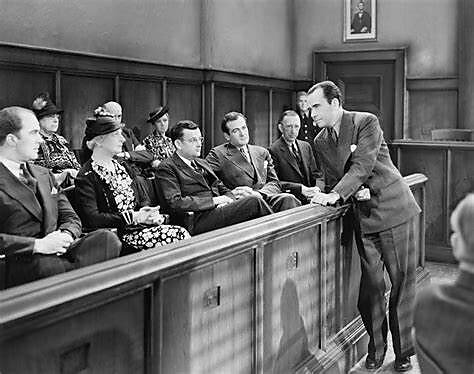
He Held the Door for Years, But the Court Slammed One on Him

In 2023, Charles Foehner, a 65-year-old retired doorman and firearms collector, found himself in an unimaginable scenario. While walking to a Queens, NY, parking garage, a stranger brandishing a sharp object tried to mug him. Foehner pulled a revolver from his pocket and fired, killing his attacker, who had an extensive criminal record and a history of mental illness.
Prosecutors correctly declined to charge Foehner for the death. But the gun-grabbing prosecutors in the Queens District Attorney’s Office refused to leave the senior citizen alone. Instead, they prosecuted him for the very things that saved his life: unlicensed firearms.
Facing the terrifying prospect of 25 years behind bars, Foehner recently pleaded guilty, accepting a four-year prison sentence. Some might wonder why he would accept prison time if his actions were morally justified and the prosecution an affront to the Second Amendment and community sentiment. The answer lies in the mechanics of the modern courtroom: perhaps Foehner knew that if he went to trial, he would not face a truly impartial jury. In fact, the charge would have been very easy to prove, potentially condemning Foehner to a premature death behind bars.
Foehner’s fears are not irrational. Take the case in neighboring Brooklyn, where prosecutors charged, and a jury—not apprised of its historic injustice preventing prerogatives—convicted Dexter Taylor, a software engineer, for collecting unregistered, unlicensed firearms. For that, the 53-year-old father with no criminal history is currently serving a decade behind bars.
If properly instructed, Taylor’s jury could have blunted the force of the unjust application of the law. Likewise, Foehner could have risked going to trial. His jury would not have been limited to deciding whether he possessed an unregistered handgun—a fact he openly admitted. A jury acting as the conscience of the community—as the Framers envisioned—would have been entitled to ask what sentence would be imposed and what civil rights he would lose forever. They could have weighed the necessity of his self-defense against the letter of the licensing statute. They could have reasoned, acted, and potentially spared him from prison.
But the American criminal justice system has been consciously engineered to ensure that conversation never happens.
At the Founding, criminal jurors were not relegated to the role of mere factfinders. Historically, the institution of jury independence played a vital role in assessing the legitimacy of a prosecution. Founding-era jurors were tasked with preventing injustice—often acquitting factually guilty defendants if they perceived the law as immoral or the punishment as disproportionate to the wrongfulness of the crime.
This concept has deep roots in New York. In 1735, a New York jury acquitted dissident publisher John Peter Zenger of seditious libel for criticizing the royal governor, establishing a celebrated precedent for jury nullification in the New World. Whether protecting publishers like Zenger or acquitting abolitionists under the Fugitive Slave Act, jurors have long protected their neighbors from an excessively punitive government without controversy.
Today, however, the definition of an impartial jury has been quietly rewritten. “Impartial” no longer means open-minded; it means compliant.
The distortion begins during jury selection. If a prospective juror expresses sympathy for the historic power of the jury to acquit based on conscience, they are swiftly struck from the panel. Prosecutors and judges have created a framework that all but guarantees the exclusion of anyone who views the jury as a serious check on government overreach.
Once these qualified jurors are seated, the court proceeds to mislead them. Judges routinely state, “Your role is to be a judge of the facts.” This may sound benign, but it is a form of deception by omission. It strips the community of its moral agency, reducing jurors to bureaucratic fact-checkers.
The deception deepens when jurors are told they cannot consider punishment. By keeping the jury blind to the potential sentence—in Foehner’s case, a quarter-century behind bars—the system allows them to rationalize a conviction, assuming the punishment will be lenient even when mandatory minimums ensure it will be draconian.
But the most egregious violation is the standard New York jury instruction, which tells jurors: “If the state proves every element of the charged offense beyond a reasonable doubt, you must convict.”
This instruction is historically inaccurate and constitutionally infirm, despite having been upheld by the New York Court of Appeals. This means that whenever anyone—whether it is a retired doorman like Charles Foehner or former President Donald Trump—exercises their Sixth Amendment right to a trial in New York, they are not being tried by the impartial jury the Constitution commands. They are being tried by a system that deliberately hides from jurors their historic prerogative to acquit against the evidence when justice demands—as it would have here.
We have replaced community conscience with a rubber stamp for the state. If we want a justice system that is truly constitutional, we must stop treating jury independence as a defect. An impartial jury is not one that does exactly what it is told; it is one that understands it has the power to simply say “no.”
Had jurors been informed of these historic powers, perhaps Foehner would have gone to trial. And maybe his jury would have rendered a verdict of not guilty. Instead, Foehner stares down his January 14 sentencing date, grateful—for now—that a judge allowed him to spend Christmas with his wife rather than at New York City’s notoriously violent Riker’s Island, as prosecutors requested.