
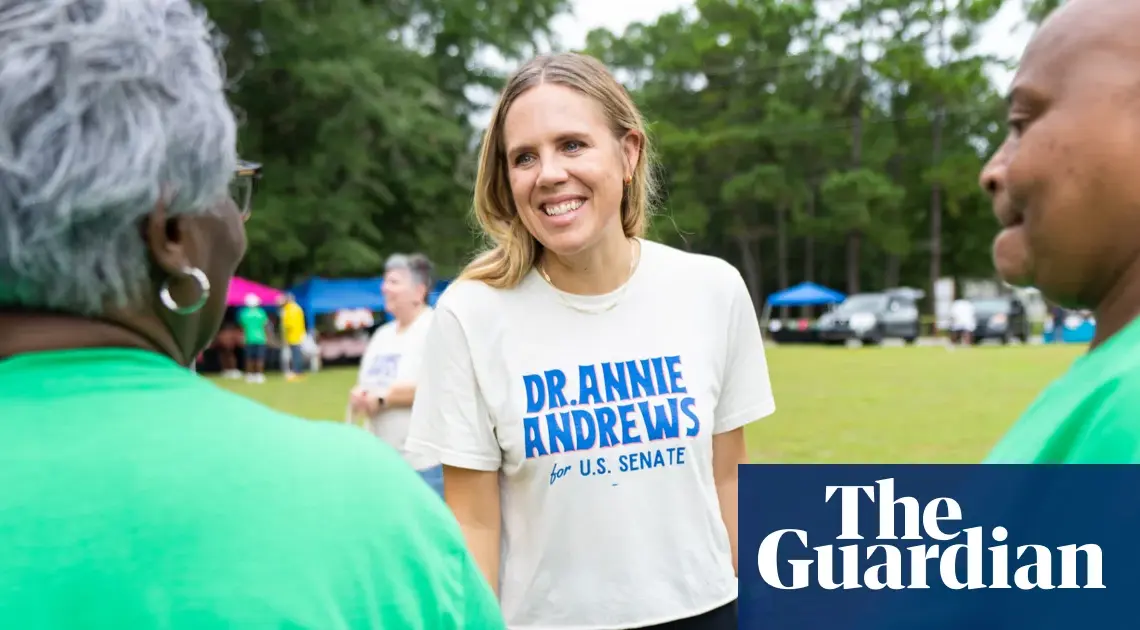
Annie Andrews spent two decades as a pediatrician before deciding to challenge the established political order in South Carolina. Once considered a dark horse Democrat, Andrews has suddenly found herself at the center of a high stakes Senate race following the unexpected passing of Senator Lindsey Graham. She is now facing off against Darline Graham, the late senator’s sister, in a contest that serves as a litmus test for whether medical expertise can translate into electoral success in a deeply conservative state. For Andrews, the campaign is not just about party lines but about bringing clinical experience to a government struggling with measles outbreaks and failing public health infrastructure.
Her candidacy is part of a broader strategic push by 314 Action, a political action fund determined to place one hundred doctors in state and federal offices by 2030. The organization believes that physicians possess a unique kind of credibility that can bridge partisan divides and restore public trust in science during an era defined by misinformation and drastic cuts to healthcare funding. With millions of dollars already raised to build this pipeline of talent, proponents argue that having practitioners on the frontlines of policy making is essential for defending scientific research from political interference.
However, translating a medical degree into a winning campaign remains a daunting task. Historical data suggests that candidates with backgrounds in science and technology often struggle more than traditional politicians, partly because their technical identities may not always resonate with voters at the ballot box. Furthermore, many talented doctors are deterred from running due to the crushing weight of medical school debt, leaving the field open primarily to wealthier candidates who may not share a commitment to evidence based medicine.
Despite these hurdles, advocates like Hawaii Governor Josh Green emphasize that creating a deeper bench of physician leaders is necessary for effective governance. By mentoring newcomers on how to communicate complex health issues without sounding overly academic, they hope to shift the legislative culture toward fact based problem solving. While victory in red states like South Carolina remains an uphill battle for Democrats, supporters believe that every doctor who runs helps move the needle closer to a future where health policy is guided by those who have actually treated patients.