
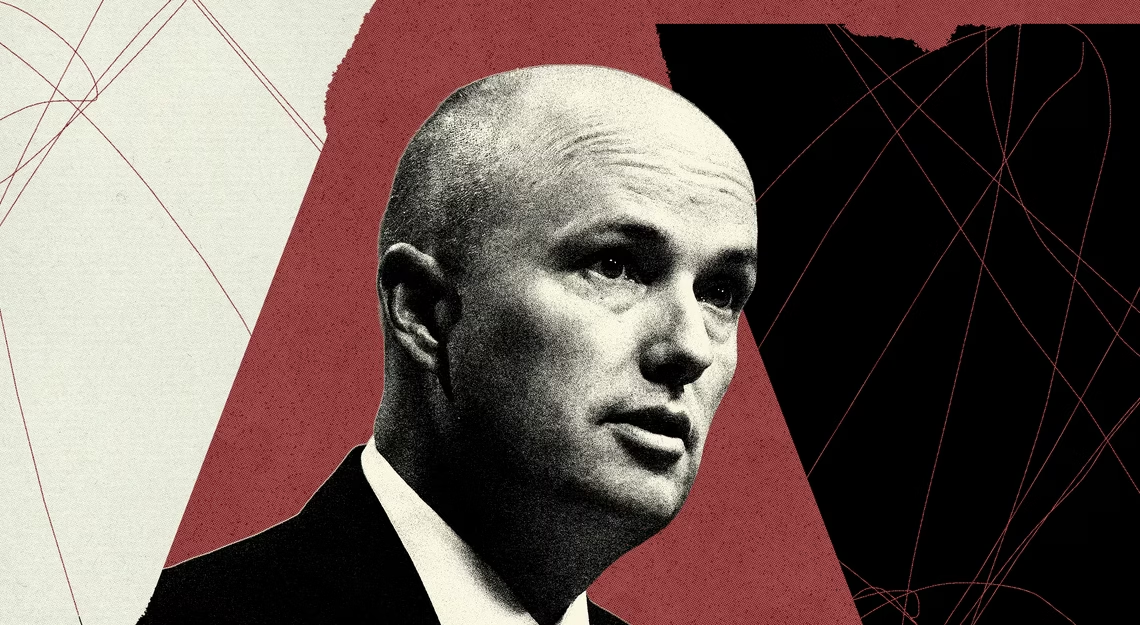
Spencer Cox, the governor of Utah, once found himself in the backseat of an armored presidential limousine with a request that seemed bordering on the delusional. He looked at Joe Biden and suggested that the president pardon Donald Trump. For Cox, this wasn’t born out of loyalty to the former president, whom he had never voted for, but rather from a desperate fear that prosecuting a political rival would permanently shatter the American psyche. He believed a gesture of mercy could break a cycle of partisan retribution before it spiraled out of control. To his surprise, Biden admitted he had discussed the idea with his wife, giving Cox a fleeting sense that a peaceful off ramp actually existed.
That hope proved fragile. After an assassination attempt nearly took Trump’s life at a rally, Cox pivoted his strategy toward the other side of the aisle. He wrote to Trump, urging him to seize a historic moment to unify and save the country through restraint and magnanimity. While Trump accepted Cox’s subsequent endorsement with enthusiasm, the vision of a great unifier vanished almost instantly. Within days, Trump returned to his familiar cadence of insults and grievances, leaving Cox to realize that appeals to nobility often wither in the face of political appetite.
These exhaustive efforts serve as the centerpiece of Cox’s upcoming book, Off Ramp: How to Be a Peacemaker in an Age of Contempt. Far from being a simple manual on politeness or bipartisan niceties, the book is an autopsy of modern American anger. Cox argues that the nation isn’t suffering from poor manners or mere disagreement, but from deep seated contempt—the belief that those with different views are fundamentally inferior and unworthy of respect. He maintains that healthy conflict is essential to democracy, provided it doesn’t devolve into mutual hatred.
Despite his intellectual convictions, practicing this philosophy has come at a significant personal cost. Following his strategic embrace of Trump, Cox faced intense backlash from allies and friends who viewed his move as a surrender rather than diplomacy. One acquaintance went so far as to tell him that if he had prayed about the decision, he should probably pray again. Sitting on his family farm in central Utah, reflecting on these betrayals and failures, Cox remains stubbornly optimistic. Even as he admits he may have failed in his specific missions with two presidents, he continues to insist that finding a way back from the brink is the only alternative to total collapse.