
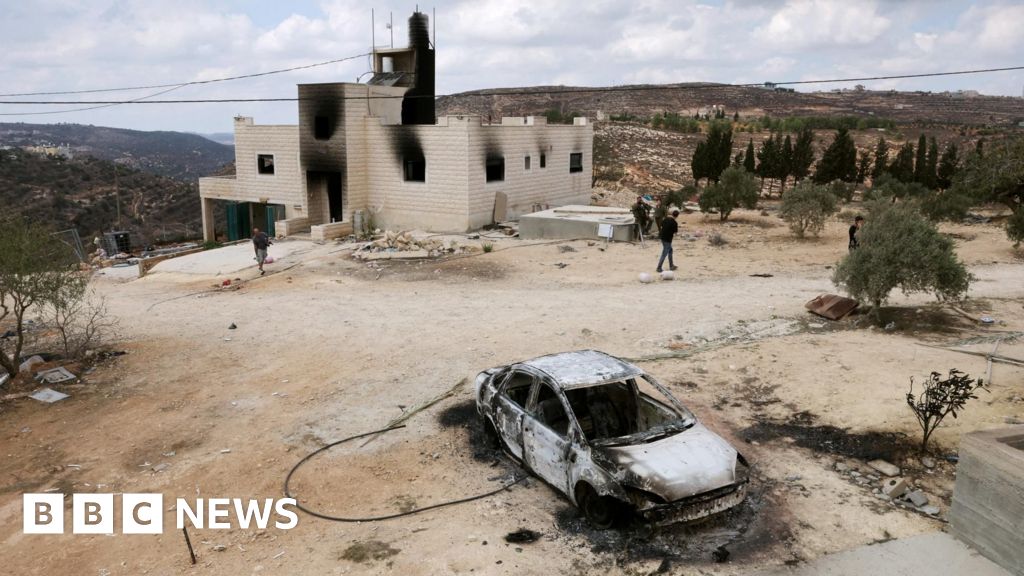
A harrowing attempt to reclaim their ancestral home ended in fire and terror for the al-Tubasi family on Monday night. Despite a mandate from Israel’s High Court ordering their return to the village of Jalud, more than 100 Israeli settlers descended upon the community, blocking the family’s path and setting two of their houses ablaze. The event unfolded like a nightmare for 60 year old Mahmoud al-Tubasi, who recounted escaping what he believed was a certain death sentence as extremists swarmed the area following coordinated alerts sent via WhatsApp.
The ordeal began around midnight when the family was told by Israeli officials that military coordination was in place for them to retrieve their property. Upon arriving by torchlight, the family found their residence already devastated, with shattered windows, ripped out electrical fittings, and filth strewn across the floors. As they stepped inside, they were met with a barrage of stones. While some soldiers used pepper spray to shield the family and eventually evacuated them in an armored vehicle, they watched from safety as settlers torched their personal car and burned their homes to the ground.
In a statement following the chaos, the Israel Defense Forces acknowledged that nationalist crime had prevented the mission from being completed and noted that several police officers were lightly injured during the clashes. Prime Minister Benjamin Netanyahu issued a condemnation of those he termed rioters, urging law enforcement to prosecute them to the fullest extent of the law. However, these promises often ring hollow for critics who point to a systemic failure in justice; data from human rights group Yesh Din suggests that less than three percent of settler violence investigations lead to convictions over the last twenty years.
This latest eruption is part of a broader and increasingly violent trend in the occupied West Bank. International observers and UN agencies report that settler violence has hit record highs this year, displacing thousands of Palestinians as some members of the current Israeli government push for expanded control over the territory. For families like the al-Tubasis, whose struggle was highlighted by a high court ruling criticizing state inaction, the gap between legal protections and reality remains dangerously wide.