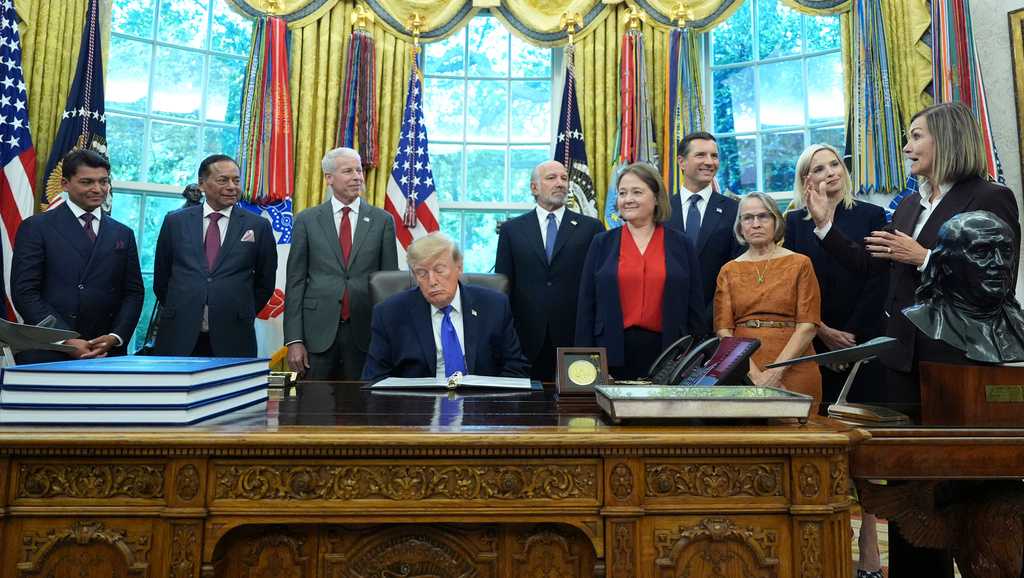
President Donald Trump gathered steel executives and Iowa political leaders at the White House on Monday to unveil plans for a massive new steel plant in southeast Iowa. The facility, which is projected to cost 15 billion dollars, is intended to be the largest of its kind in the United States. Built by Mesabi Metallics, a Minnesota company owned by the India based Essar Group, the mill is slated to begin production by 2030. Officials estimate the project will generate roughly 6,000 construction jobs and eventually provide 1,750 permanent positions paying upwards of 49 dollars per hour.
The administration is positioning the move as a cornerstone of its effort to revitalize domestic manufacturing and strengthen national security. According to the White House, the operation will be fully vertically integrated within the U.S., spanning everything from iron mining to final production, ensuring a steady supply of high grade steel for critical defense needs. Governor Kim Reynolds described the investment as transformational for Lee County and praised the commitment to bringing heavy industry back to American soil after noting that tough negotiations were required to secure the deal.
While the announcement was met with enthusiasm from Republican leadership, some questions linger regarding the financial specifics. Commerce Secretary Howard Lutnick stated that private funding would drive the construction of the plant rather than federal grants, though he noted that the Export Import Bank assisted with financing for the mine providing the raw materials. Despite these assurances, some Iowa lawmakers expressed curiosity about whether state level tax breaks or incentives played a role in attracting the company, especially following recent rumors of a possible special legislative session to discuss such packages.
Democratic leaders in Iowa voiced cautious optimism about the potential for job growth but called for greater transparency regarding any agreements made with the foreign owning entity. State Senate Democratic Leader Janice Weiner emphasized that without clear details on worker guarantees or taxpayer costs, it remains difficult to determine if the arrangement serves the public interest entirely. Nevertheless, representatives like Mariannette Miller Meeks believe the project represents a turning point for rural communities that have historically seen industrial jobs migrate overseas.