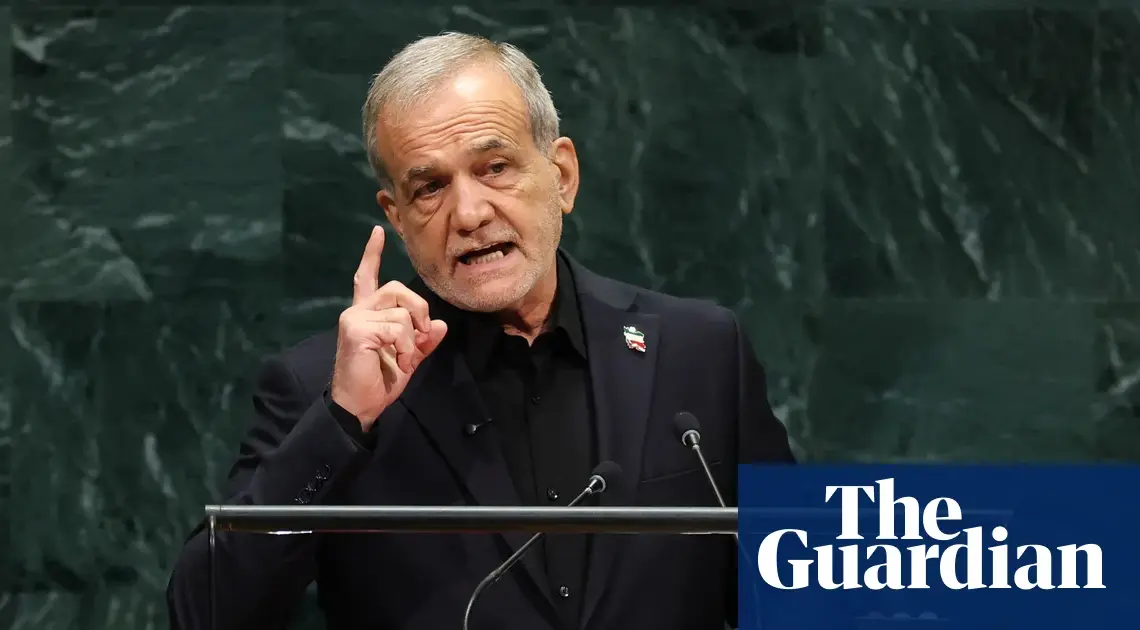
Iranian President Masoud Pezeshkian delivered a searing critique of the United States during his first address to the UN General Assembly since the outbreak of war between Iran, the US, and Israel. In a defiant tone, Pezeshkian flipped the script on Donald Trump’s rhetoric, labeling the United States as the true bully and terrorist in the Middle East. He specifically condemned Washington for what he termed state terrorism following the assassination of Supreme Leader Ayatollah Ali Khamenei and presented photographs of deceased schoolchildren to illustrate the cost of American aggression. Despite these accusations, Pezeshkian carefully balanced his anger with an open door for diplomacy, stating that Tehran remains ready for negotiations provided they occur without the threat of force.
The tension in New York was palpable as the US delegation walked out during Pezeshkian’s speech, even though high level meetings had occurred just hours earlier. A surprising three hour session between Iranian Foreign Minister Abbas Araghchi and US special envoy Steve Witkoff was described as constructive by both parties, marking their first direct contact since June. While Donald Trump has publicly weighed whether to annihilate Iran if a deal is not reached, there are signs that domestic pressures in America are pushing him toward a resolution. With midterms approaching and global energy prices soaring due to maritime blockades, Washington is increasingly desperate to stabilize oil markets and lower costs for voters.
Much of the current diplomatic friction centers on the Strait of Hormuz, a vital artery for global energy that has seen tanker traffic plummet to fewer than five ships per day. Pezeshkian signaled that Iran might reopen the waterway within a week if seven specific preconditions are met, which include ending the naval siege and releasing frozen Iranian assets. However, this offer comes with a significant catch; Tehran appears intent on demanding greater control over shipping lanes passing through its waters to prevent arms shipments from reaching its enemies. This move would effectively grant Iran oversight over one of the world’s most critical trade routes in exchange for stability.
While Pezeshkian seeks a path forward through regional partnerships rather than Western interference, he faces stiff opposition from hardliners back home. Mohsen Rezaei, secretary of the supreme national security council, dismissed reports of actual negotiations and warned neighboring countries against cooperating with US travel bans on Iranians. By threatening retaliation against regional airports that align with Washington, Rezaei highlighted a deep internal divide in Tehran between those seeking pragmatic relief from sanctions and those determined to maintain a stance of total resistance regardless of the economic cost.